At the Smart City Exchange Forum in Tallinn, one message rose above the rest: resilience is no longer a side issue. It is becoming the basic condition of urban survival.
News
Why resilient cities matter more than ever
Published on 20.04.2026
Written by Silver Tambur, Estonian World
At the Smart City Exchange Forum 2026, held in mid-March in Tallinn, the word resilience gradually shed its conference-polish vagueness and became something far sharper: the organising principle of urban life in an age of overlapping shocks.
By the end of the day, after speeches and panels covering everything from floods and climate risk to cyberattacks, emergency coordination, digital dependency and EU funding, one conclusion had become difficult to avoid. The modern city is no longer simply trying to become smarter. It is trying to remain functional under permanent stress.
Floods, heatwaves, ageing infrastructure, cyber insecurity, disinformation, war preparedness, social fragmentation, energy vulnerability and institutional overload are no longer separate policy themes waiting neatly in line. They collide, reinforce one another and increasingly arrive at once. If the old urban promise was efficiency, the new one is resilience.
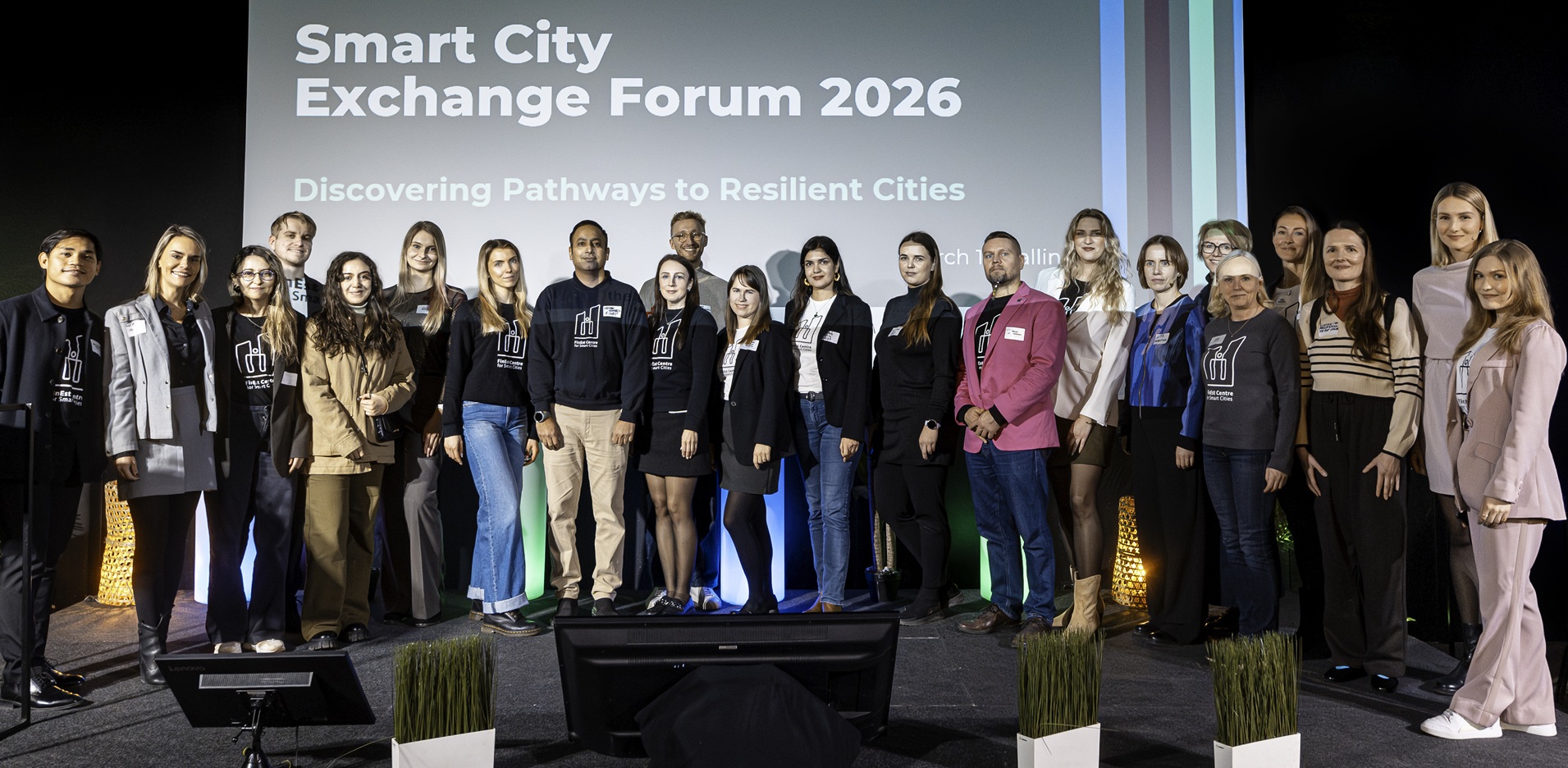
The forum was organised by the FinEst Centre for Smart Cities, whose work sits at the intersection of research, city development and practical experimentation. That role was repeatedly visible throughout the day – not only in convening city leaders, researchers and practitioners, but in pushing the discussion beyond slogans towards methods, tools and institutional reality.
 Smart City Exchange Forum 2026, photo Aldis Toome
Resilience as practical governance
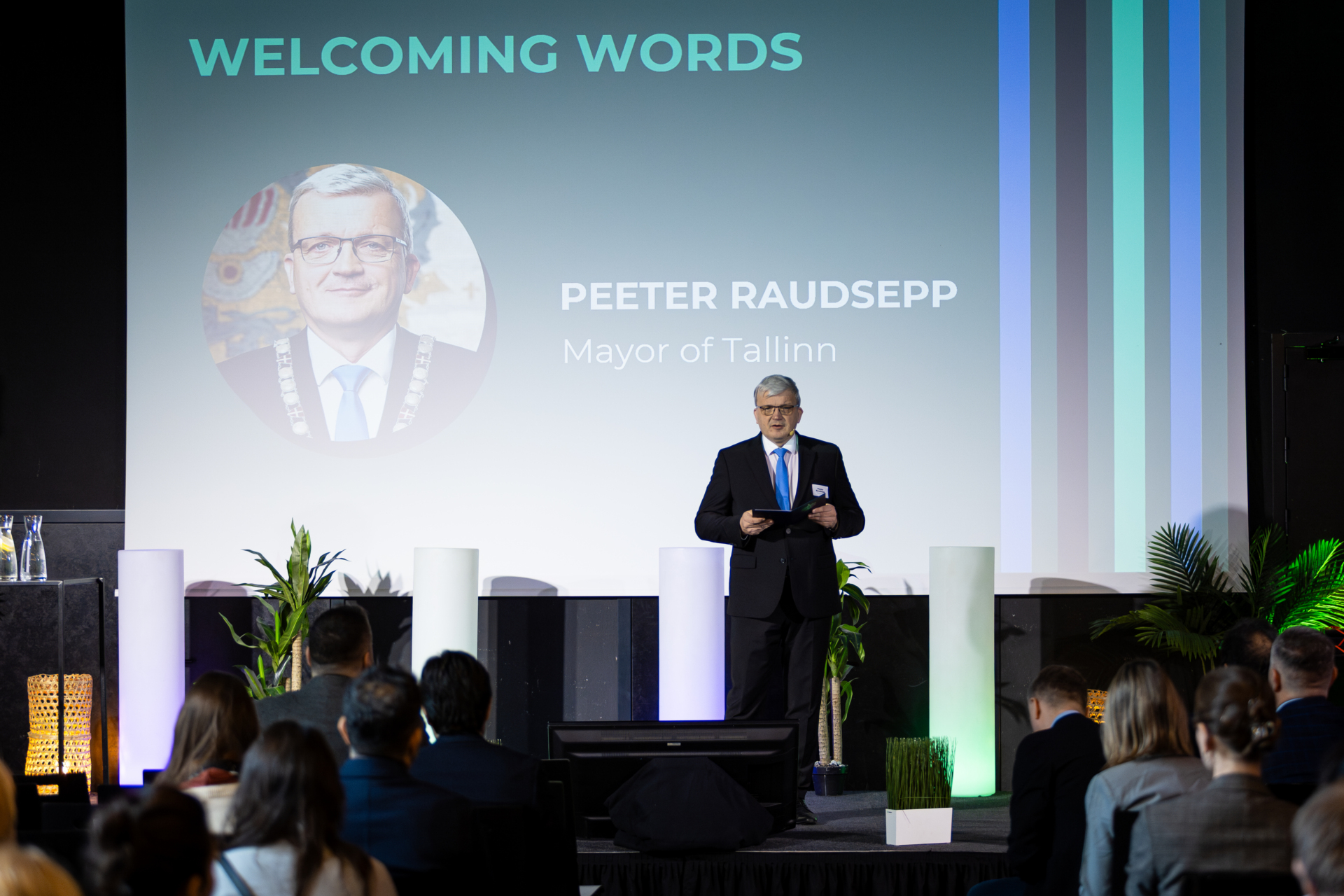
Tallinn Mayor Peeter Raudsepp opened the conference with a clear statement of intent: resilience is “not optional”, “not theoretical” and no longer a secondary concern. It is “practical governance”.
His point was direct. Cities are dense, interconnected systems. Transport, energy, water, digital services and emergency response do not fail in isolation. When one breaks, others begin to wobble. In that sense, resilience is not merely a technical issue but a systemic one.
Preparedness, Raudsepp argued, means making decisions before the crisis, not after it. It means ensuring that when disruption occurs, hospitals continue to function, schools remain open, public transport keeps moving, digital services remain accessible and communication stays transparent.
There was also a distinctly Estonian dimension to his speech. In a highly digital society, digital systems are now critical infrastructure. If digital identity fails, public services fail. If communication systems are compromised, trust in data integrity suffers. Governance itself is weakened.
Yet Raudsepp also stressed a limit that many smart-city conversations still prefer to blur: technology cannot build resilience on its own. Citizens must understand how systems function. Community engagement must be real. Trust must be built before the emergency arrive
The anatomy of a resilient city
That wider view was taken further by Esteban Leon, head of the City Resilience Global Programme at UN-Habitat, who drew on more than two decades of work in disaster-hit and conflict-affected cities.
His argument was simple but powerful: cities cannot keep “running after disasters”. By the time they react, they are already late. The task is to build cities capable of withstanding, adapting and recovering before a shock turns into collapse.
Leon’s keynote framed the city as a living organism. Its skeleton is spatial structure – where and how it is built. Its organs are infrastructure and ecosystems. Its heart is its communities and economy. Its nervous system is governance and institutions. If one part is weak, the rest suffer.
That framing mattered because it pushed the discussion well beyond engineering. Floods do not become humanitarian disasters because of rain alone, Leon argued, but because of inequality. Heatwaves do not become deadly because of temperature alone, but because of poor urban design.
Communities recover not simply because institutions intervene, but because they are connected, organised and empowered. “Social cohesion,” he said, “is not a soft concept. It is critical infrastructure.”
The article was originally published in Estonian World portal: Continue reading
Stay informed about our developments, projects and research on smart cities: sign up for our newsletter!