Uudised

Meet Albert: Researching why public sector AI initiatives struggle and how to do better

From public administration and digital governance to policy consulting and work at the OECD, Albert Rapha’s career has been shaped by one central interest: how governments can use technology to create genuine public value. Now, as a PhD researcher at TalTech’s Academy of Architecture and Urban Studies and at the FinEst Centre, he is examining why public-sector AI initiatives run into difficulties, how early warning signs develop throughout their lifecycle, and what governments can learn from them.

His research looks beyond technology to questions of governance, accountability, institutional capacity, and public trust, with the aim of helping cities make more responsible decisions about AI.

In this article Albert shares his journey. Continue reading!
Could you share more about your work, background and your research area and interest?

I am originally from the island of Java, Indonesia (yes – the Java programming language was named after the island!).

My academic journey began in public administration, where I developed a strong interest in governance and public policy. I later complemented this foundation by studying information systems and digital governance, which led me to explore how governments can harness emerging technologies to address societal challenges.

My practical journey began as a student activist engaged in socio-political movements, where I advocated for human-centred technology and often criticised government policies. Over time, however, I came to believe that critique should not only identify problems but also help governments solve them. Rather than entering politics, I chose to work alongside public institutions – first as a policy consultant in Indonesia and later at the OECD.

What are your main research topics and what draws you to these topics?

During my PhD, I will study why public-sector AI projects experience distress and how warning signs emerge over time. Rather than viewing failure as a single event, I see it as a longitudinal process that can develop from problem definition and procurement through deployment and long-term operation.

I am also interested in how governments can learn from these signals to improve future AI initiatives and create greater public value. I am very much looking forward to working on this topic with Prof. Luca Mora and Prof. Ralf-Martin Soe.

How does your research connect to smart cities?

Technology alone does not make a city smart. A city can adopt advanced AI systems while still falling short in transparency, accountability, inclusion, or public trust.
I am interested in how municipalities identify risks early, define responsibilities clearly, engage stakeholders, and build the institutional capacity needed to manage AI over time. For me, a truly smart city is one that uses technology thoughtfully, remains accountable for its consequences, and ultimately improves people’s lives.

What do you like to do outside work and research?

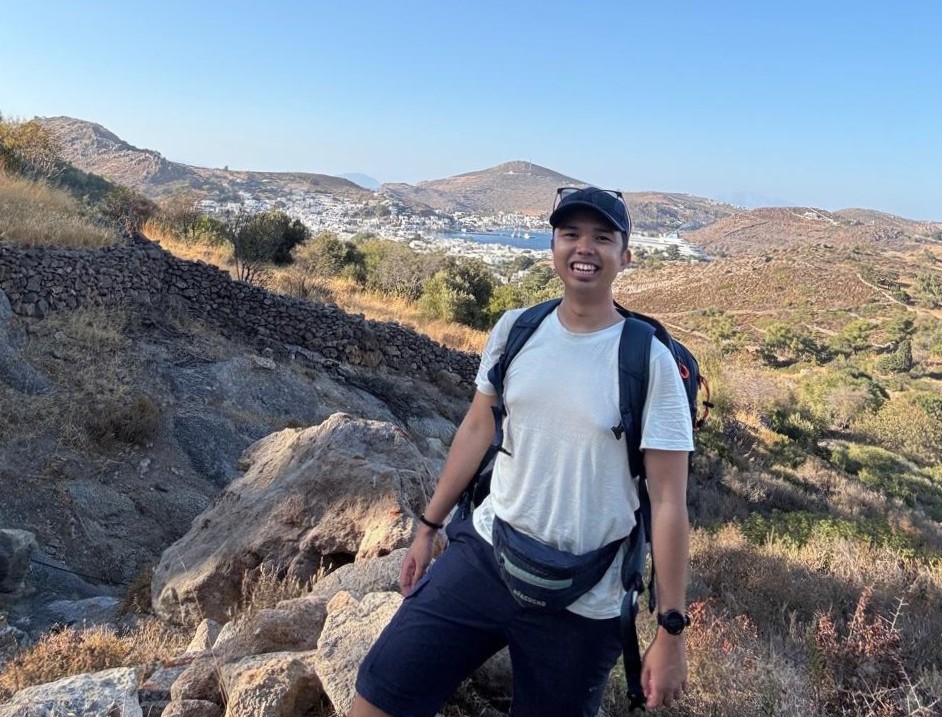
Outside work, I enjoy hiking, listening to jazz, and watching football (I’m a die-hard Manchester United fan! #GGMU). Hiking, travelling through remote areas, and meeting local people have always reminded me that research should ultimately improve people’s lives rather than remain confined to the ivory tower.

What do you hope to gain from the experience of working at the FinEst Centre?

I hope to deepen my research skills while working in an interdisciplinary environment that connects technology, governance, and urban development. I look forward to learning from colleagues across different disciplines at FinEst and contributing to research with practical relevance.

In the long term, I hope this experience will help me become both a researcher and a practitioner who bridges academic knowledge and public policy, supporting governments and cities in making more responsible decisions about AI while strengthening collaboration between Europe, the Asia-Pacific, and beyond.

Sarnaseid uudiseid