Uudised

Meet Johannes: Turning early ideas into funded research

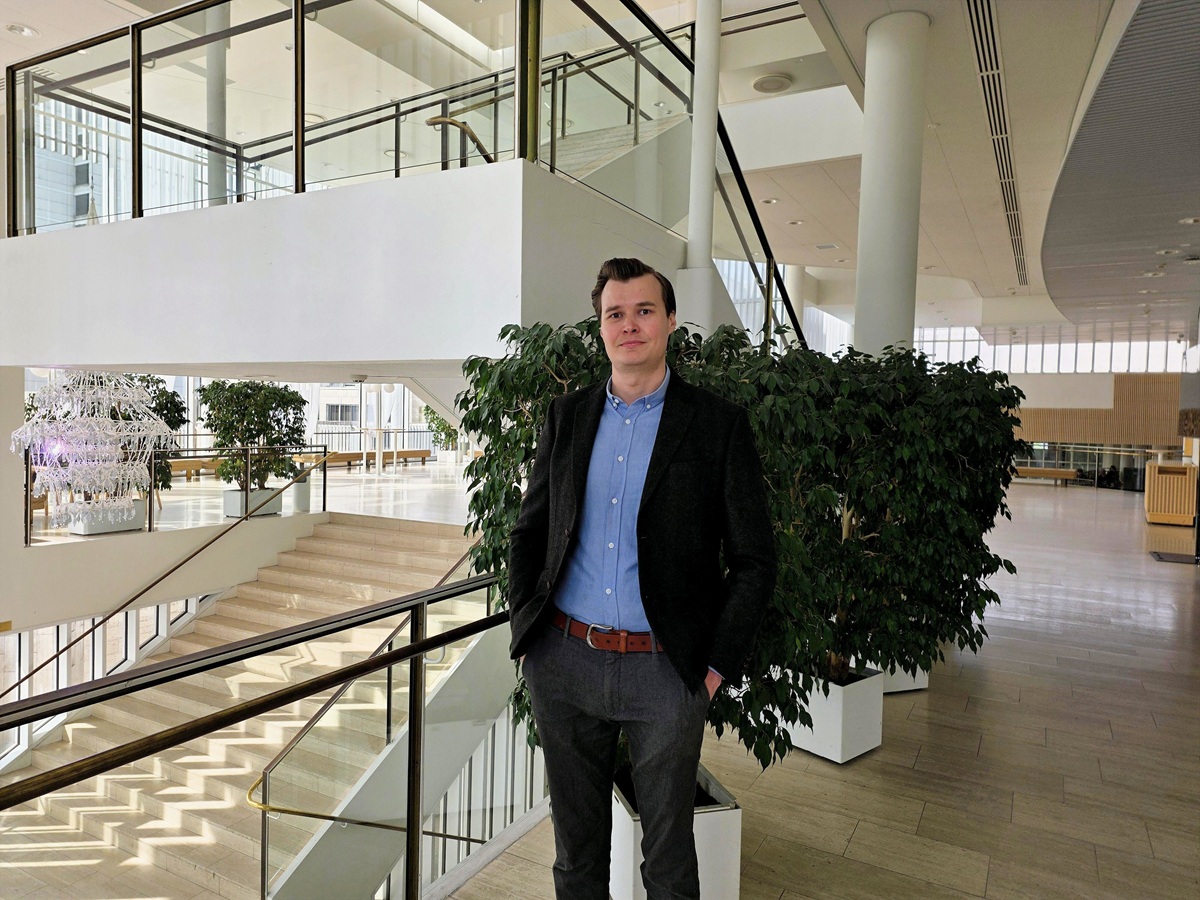
Dr. Johannes Einolander has joined the FinEst Centre for Smart Cities as a Research Fellow, bringing an interdisciplinary expertise across energy, sustainability, analytical decision support, and innovation project development. 

Read about Johannes’ journey, expertise, and how he describes his work turning research into real-world impact.

Advancing research through funding, collaboration, and innovation

I joined the FinEst Centre as a Research Fellow, where my role focuses primarily on proposal development, funding acquisition, and the early-stage development of new research and innovation projects. In practice, that means identifying promising funding opportunities, developing project ideas, consortium-building, and contributing to research development more broadly. So far, I have completed a proposal for the Estonian Research Council and am currently working on a Horizon Europe call, while also continuing my own research and publication work. 

My academic background is highly interdisciplinary. I completed my Doctor of Science (Technology) degree at Aalto University, where my dissertation focused on developing novel modelling approaches to examine the economic implications and resilience benefits of electric vehicle demand response and bidirectionality. I also hold two master’s degrees from Aalto University: a Master of Science (Technology) in Energy Technology and a Master of Science (Economics and Business Administration) in Information and Service Management, complemented by bachelor’s degrees from both the Aalto University School of Engineering and the Aalto University School of Business.

In addition, I am a graduate of the EIT InnoEnergy PhD School, which broadened my perspective on innovation, entrepreneurship, international collaboration, and the translation of academic research into real-world impact. 

My professional background also extends beyond academia. I have experience as a startup founder, as well as in industry roles across the energy and telecommunications sectors. These experiences have shaped my approach to research and innovation: I am interested not only in strong academic research, but also in translating ideas into practical solutions with societal and commercial relevance. 

Your work sits close to the early stages of building new research and innovation projects. What do you find most interesting about that? 

What I find most interesting is that this is the stage where the direction is still open, and the decisions made early on can fundamentally shape what a project becomes. A strong research project is rarely just a good idea on paper; it also depends on the right framing, the right partners, the right timing, genuine scientific novelty, and a clear sense of why the work matters. 

For me, a big part of the appeal is turning an early idea into something concrete and compelling: identifying the core research question, understanding how it fits into the wider scientific and funding landscape, and thinking carefully about what kind of consortium can realistically deliver meaningful results. That work requires both analytical depth and strategic perspective. 

At the same time, this work also reveals some of the broader tensions that shape academic research. Good ideas do not automatically become funded projects, and even successful proposals take a long time to move from submission to implementation, which can reduce momentum. Funding call topics also have a major impact on the direction of academic research, which is not always unproblematic.

Overall, I see this earlystage work as one of the most creative parts of research. This is where you can connect disciplines, spot opportunities that others may overlook, and help build projects that are ambitious while still grounded in real needs. In that sense, proposal development is not separate from research; it is one of the places where future research agendas begin to take shape. In many ways, it also resembles entrepreneurship: you are shaping an idea, bringing the right people together, and building something with real potential to grow and create impact. 
Which research themes have been central in your work so far, and where are your interests heading now? 

My previous research has focused especially on energy, sustainability, and analytical decision support. A major part of my work has focused on themes such as electricity markets, demand response, energy resilience, and energy use behavior. I have been particularly interested in questions at the intersection of technical systems, economic incentives, and human behavior. 

For instance, my work has explored household electricity behavior, the resilience potential of bidirectional electric vehicle charging, and how renewable electricity marketing claims align with the actual temporal and geographical availability of renewable generation. I have also contributed to research on digital transformation, regional development, and the wider societal implications of technological change. Across these topics, a common thread has been my interest in complex systems, major transitions, and in developing analytical approaches that help us better understand real-world challenges. 

Looking ahead, I am interested in continuing to work across disciplinary boundaries on research that stays connected to practice. The smart city focus of the FinEst Centre is especially interesting as it connects technological advances with broader societal and strategic questions, creating opportunities for both meaningful research and practical impact. 

Johannes EinolanderJohannes Einolander

How do you think research can create impact beyond academia?

I think research creates impact beyond academia when it helps people outside universities better understand important questions and, where relevant, address practical problems more effectively. Publishing is important in academia, but it is rarely enough on its own to maximize impact. If research does not reach decision-makers, practitioners, companies, or other users in some form, a lot of its potential remains unrealized. 

Not every research project needs to become something commercial, of course. But I do think it is important to ask whether good research could go further, whether through collaboration, implementation, or in some cases commercialization. For me, the most meaningful work is academically strong, but also able to contribute beyond academia, whether in immediate applications or through longer-term influence. 

What do you hope to gain from your work at the FinEst Centre? 

What I value most about the FinEst Centre is the opportunity to work in an interdisciplinary environment where research is closely connected to practical challenges. I am especially interested in the Centre’s piloting focus, because it offers a concrete way to test and develop ideas beyond the conceptual stage. I also see it as a strong place to continue developing my proposal development skills in an international setting, while also continuing my own research and publication work.

More broadly, I think the FinEst Centre offers a valuable balance between academic research and the opportunity to see ideas taken further into practice. 

Stay informed about our developments, projects and research on smart cities with our bi-monthly newsletter – subscribe now!

Sarnaseid uudiseid