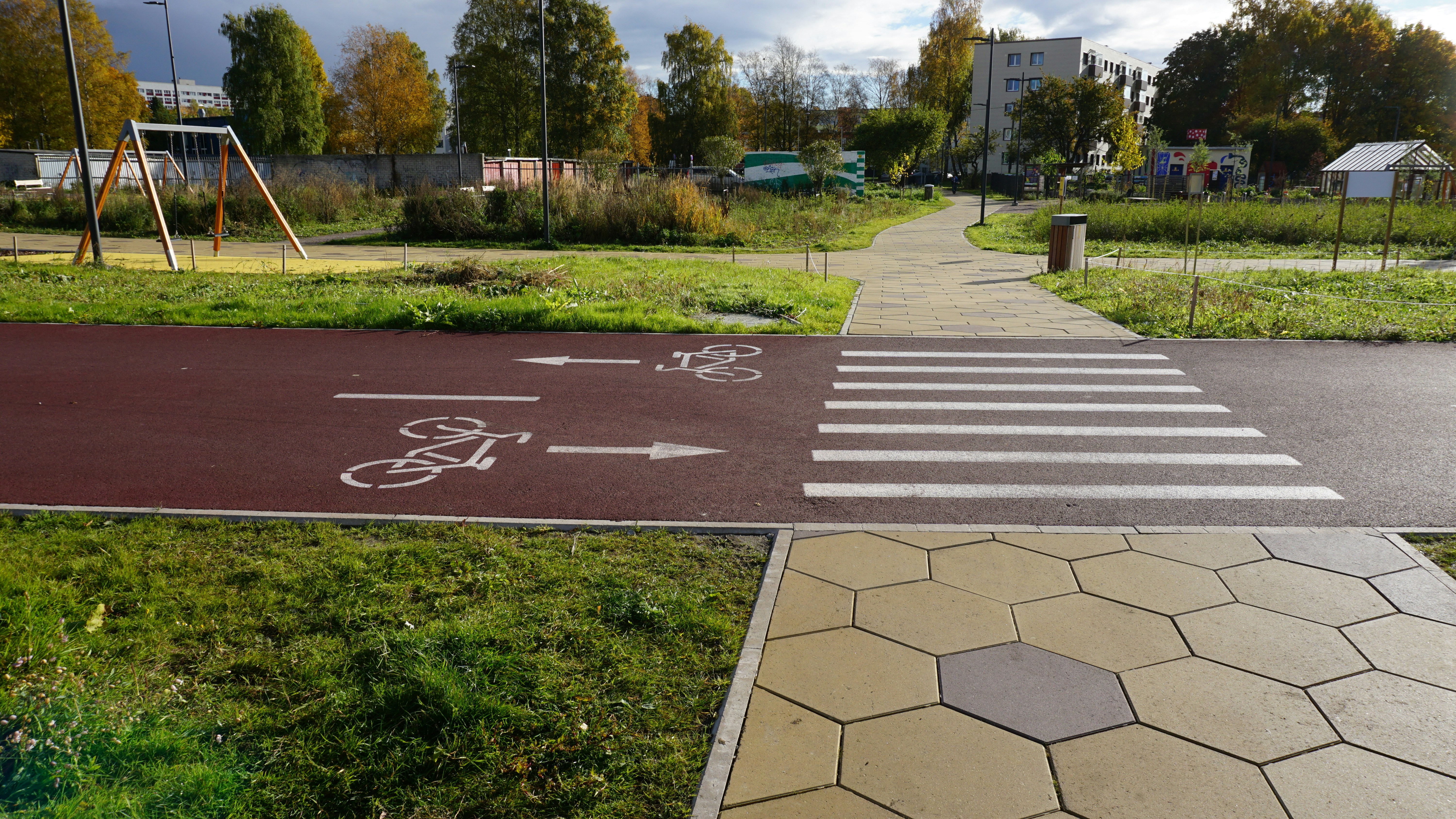
Cities will be able to assess bike paths more accurately
In addition to existing deficiencies, it is equally important to assess streets where bike lanes currently do not exist, but where they may be needed.
The pilot cities of the project would be Tallinn, Jõhvi, Tartu, Barcelona, Lviv, Kuldīga and Istanbul. Such variability provides an opportunity to test solutions on different types of problems. According to Leier, in Lviv, the cycling infrastructure is rather discontinuous, which is why it is necessary to look at how to connect individual sections into a whole. In Tartu, the main emphasis is on expanding the existing network. In Istanbul, the work is complicated by narrow streets and a lack of cycling infrastructure.
In addition to the usual indicators, the team also wants to take into account noise, air pollution, traffic flows and other environmental data. A more complex dataset would give the city the opportunity to assess not only the existence of a bike path, but also its comfort, pleasantness and integrity. “The goal is to make the analysis many times faster, because the artificial intelligence can process image and data material dozens of times faster than a human,” Leier confirmed.
According to Leier, when assessing cycling infrastructure, traffic accident data must also be looked at. This will help to better understand which places are dangerous for cyclists and where improving the infrastructure could have the greatest impact.
For city residents, better data means, above all, safer and more logical cycling routes.
Safety is affected by road width, visibility, intersections, traffic load, obstacles and connections to other road sections. “It is important that a person can move from one end of the city to the other without the road disappearing in the middle and that it is wide enough,” said Leier.