Uudised

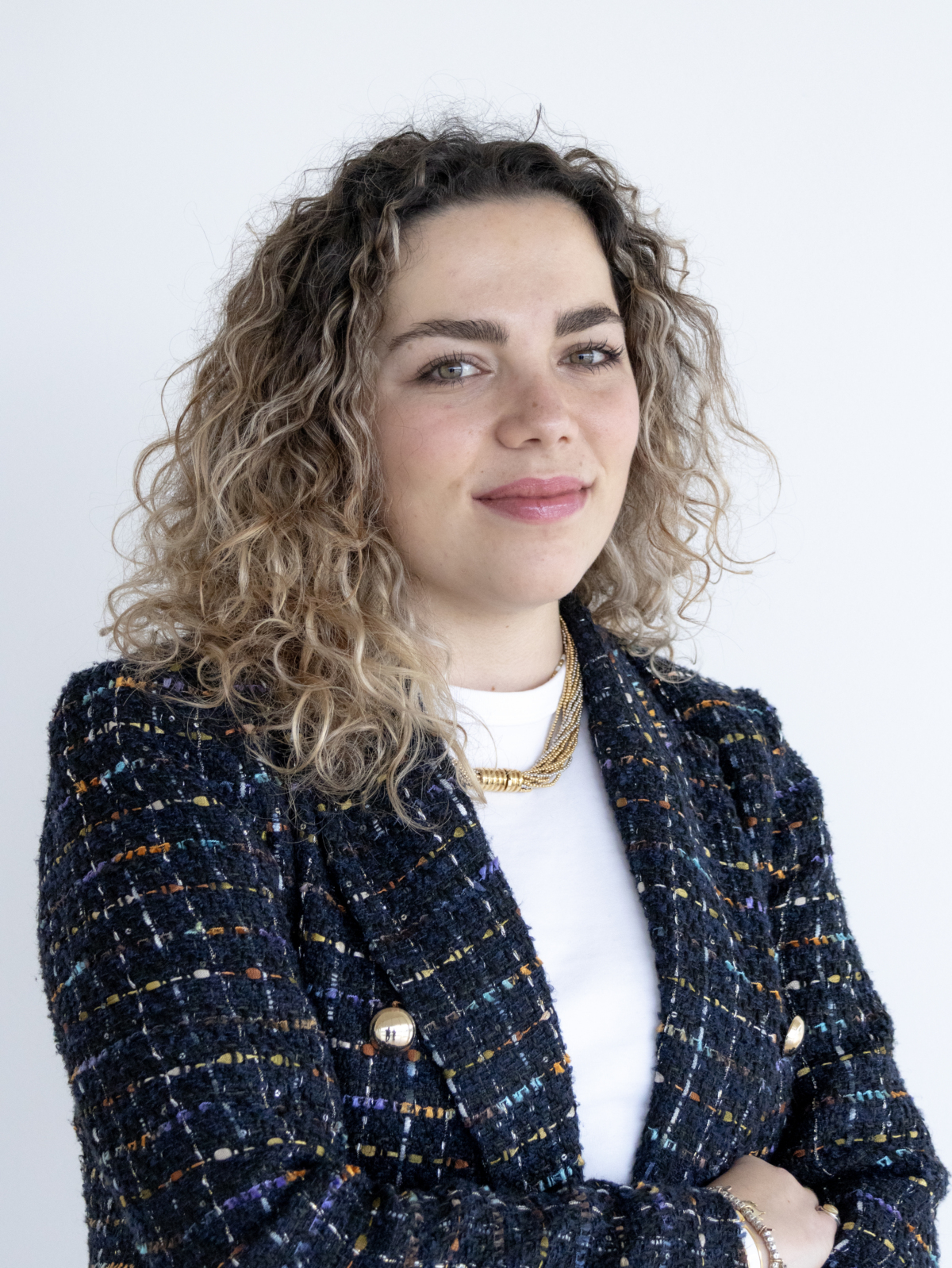
Meet Benedetta: Exploring what responsible AI means for cities

Benedetta Burston brings together research experience in cybersecurity, artificial intelligence, and public sector innovation to explore a central question: how can cities use AI responsibly and in ways that create real public value?

Her PhD research at TalTech’s Academy of Architecture and Urban Studies and working with the FinEst Centre focuses on responsible AI governance for cities, looking beyond the technology itself to the accountability, rules, institutions, partnerships, and public trust needed to make AI work in practice. At the FinEst Centre for Smart Cities, she is particularly interested in connecting this research with real urban challenges and helping promising ideas move from pilots towards lasting impact.

In this article Benedetta shares her journey, continue reading!
Could you share a bit about your academic and work, background and your research area and interest?

I came to TalTech from Bocconi University in Milan, where I spent a few years researching and teaching. My work there centred on cybersecurity and on AI in the public sector, with a focus on how governments deliver public services and take on new technologies. I collaborated with ENISA to design research frameworks and run market analysis, and I was part of AI-PACT, a consortium looking at how public administrations adopt artificial intelligence in practice. Before that, I studied and did research at Georgetown University in Washington DC, where I worked on emerging technologies and disinformation, particularly in the health sector.

Across all of it, what really draws me in is the relationship between emerging technologies and institutions as their users and orchestrators. Institutions are unusual users, with their own rules, cultures and constraints, and in this they implicitly (or less so) define whether something creates real public value or just sits there looking glitzy.

What are your main research topics and what draws you to these topics?

My PhD is on responsible AI governance for cities, and there’s one puzzle I keep coming back to. You find organisations that invest in genuinely impressive technology and still get very little out of it, and when you look closer, the problem is rarely the technology itself. It’s about accountability, about rules written in separate rooms that don’t fit together, about trust, about ex-ante strategic and holistic thinking.

What excites me most is how the shift from government to governance plays out once AI enters the picture, because a city (and likewise, any public administration level) can’t govern this alone. It needs the calibration of the right institutions, stakeholders, rules and partnerships to use technology wisely, and a lot of the old playbook simply stops holding. I’m interested in the whole journey a responsible AI solution goes through, from the way it’s designed, to how it’s procured, to how it’s co-created with the people who’ll actually use it, because responsibility isn’t something you bolt on at the end, or embed at the beginning and stop cultivating.

How does your research connect to smart cities?

A city is where all of this stops being abstract. A city doesn’t become smart by buying sophisticated technology; it does so when it relies on the infrastructure and governance mechanisms that enable it to use that technology well, in ways that are accountable and genuinely people-centred.

I’m interested in the guardrails that make AI trustworthy at city scale, the kind of accountability people can check for themselves in their actual interactions with public services, and in helping good ideas move from one-off pilots into something that takes root and improves everyday life. In this regard, my cybersecurity background also keeps me grounded about the foundations, because resilience is the thing everything else quietly depends on.

What do you like to do outside work and research?

Outside work I’m an old movies enthusiast and I read a lot of non-fiction. I’m a big music person too. I’ll happily admit to being a devoted Swiftie, to the point where I always find a way to sneak Taylor Swift lyrics into my academic and professional writing. My go-to Saturday is karaoke, which I say with total confidence and absolutely no vocal ability to back it up. I’m also really into comedy, and SNL is my favourite show of all time. And I love experimenting in the kitchen, even though I’m probably the worst cook you’ll ever meet. At this point I’ve basically made it a personal mission to disprove the idea that all Italians can cook.

What do you hope to gain from the experience of working at the FinEst Centre?

I’m really excited to be somewhere that takes the leap from research to real cities so seriously. I’d love to test my ideas against actual problems, with people who bring completely different lenses to the table, and to learn a great deal in the process from engineers, urbanists and everyone thinking about how a city really runs.

More than anything, I hope to grow into a researcher whose work really helps cities use AI in ways people can trust, and to have a good time doing it alongside a team I already have a great feeling about!

Sarnaseid uudiseid