Tallinn city buses have been equipped with smart sensors and AI-based camera systems, which will help the city identify missing, poorly visible or damaged traffic signs more quickly. The aim is to gain a better overview of the condition of traffic control equipment and thus improve road safety.
News
Tallinn buses help identify missing and damaged traffic signs
Published on 10.08.2026
Written by Press release, FinEst Centre for Smart Cities
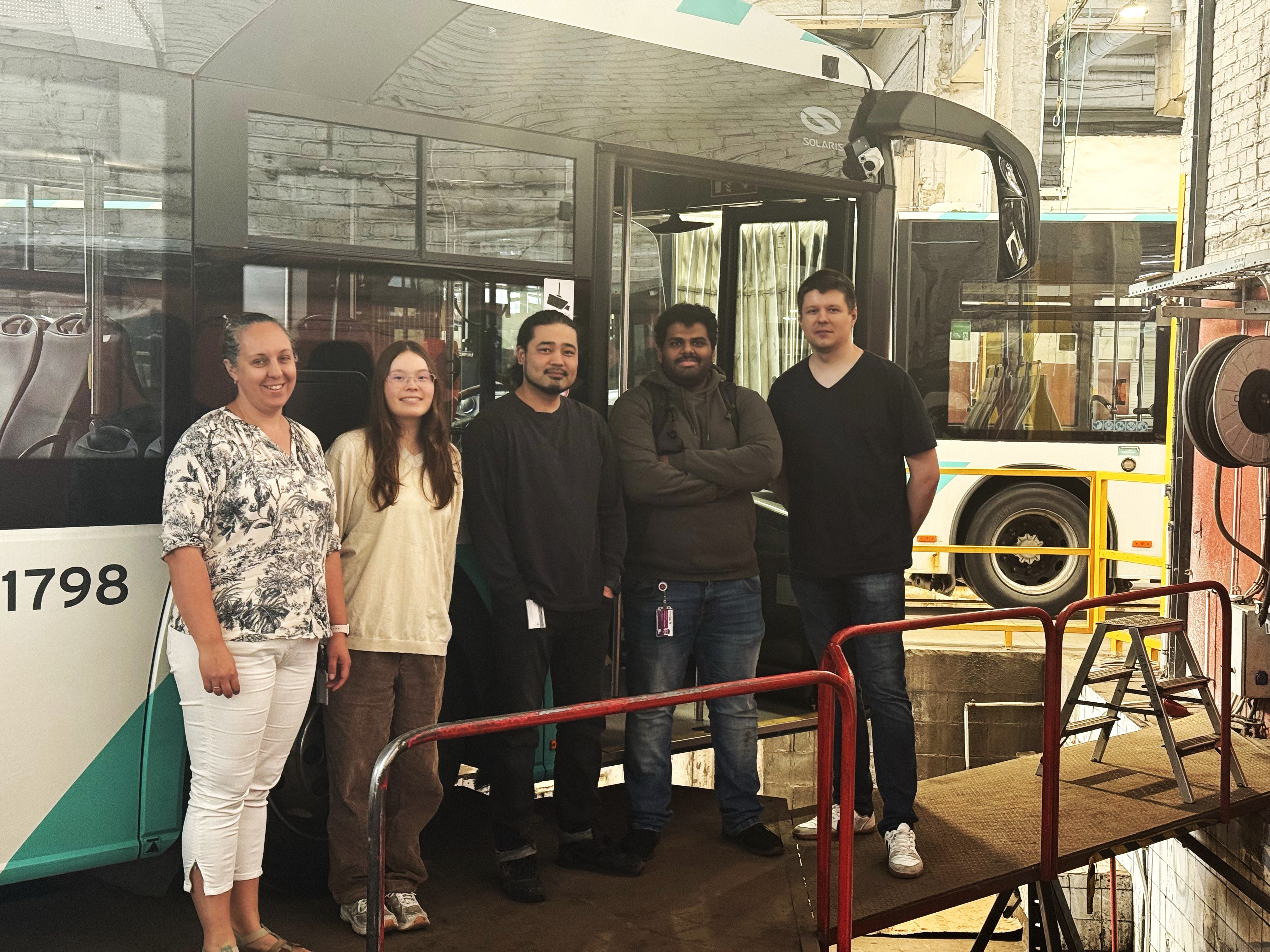
Sensors installed on the front of Tallinn buses collect visual information about traffic signs while driving. The data is processed using AI already in the vehicle, and only the necessary data is transmitted to the city via a secure cloud platform. This solution allows covering a large part of the city streets without additional manual inspection trips.
The sensors have been installed on three buses that travel through different city areas daily. Data will be collected until the end of November to assess how accurately the system can identify traffic signs and how well the solution is suitable for Tallinn.
There are approximately 50,000 traffic signs in Tallinn, and regular monitoring of their condition is difficult and resourceful. The aim of the project is to test how an automated modular sensors system can support the daily work of the city government and speed up the detection and elimination of problems.
According to Virko Noor, Head of the Traffic Management Department of the Tallinn Transport Department, the main concern is damaged traffic signs, which are not always reported in a timely manner. “Such signs create situations where road users may no longer notice, for example, a broken traffic sign or be guided by it. Currently, it can take even weeks to detect such a defect, although the problem should be solved immediately. Quick detection and response help prevent dangerous traffic situations and accidents,” said Noor.
In the future, the same platform can also be used to detect other problems in the urban environment, such as damage to the road surface and street lighting faults, or to collect environmental data. The project helps to show how solutions based on mobile sensors and artificial intelligence can make city management more efficient, data-based and economical.
This is an international project called TayuTech, led by the FinEst Centre for Smart Cities. In Tallinn, the focus is on monitoring the condition of traffic signs, in Dublin, Ireland, air quality is measured, and in Pula, Croatia, road surface damage is detected.
The implementation of pilot projects is funded by the European Regional Development Fund and the Estonian Ministry of Education and Research through the project “FinEst Targa Linna tippkeskuse piloodiprogramm“.
Additional information:
Uljana Rensalu
uljana.rensalu@taltech.ee